New vs. Used Cars: Which Option Is Best for Bay Area Drivers?
New vs. Used Cars: Which Is Right for Bay Area Drivers?
Choosing between a new and used vehicle can be challenging, especially for Bay Area drivers. From dense San Francisco streets and steep hills to long commutes across the East Bay and Peninsula, local driving conditions demand a practical, reliable car. The right choice depends on your budget, lifestyle, mileage needs, and priorities.
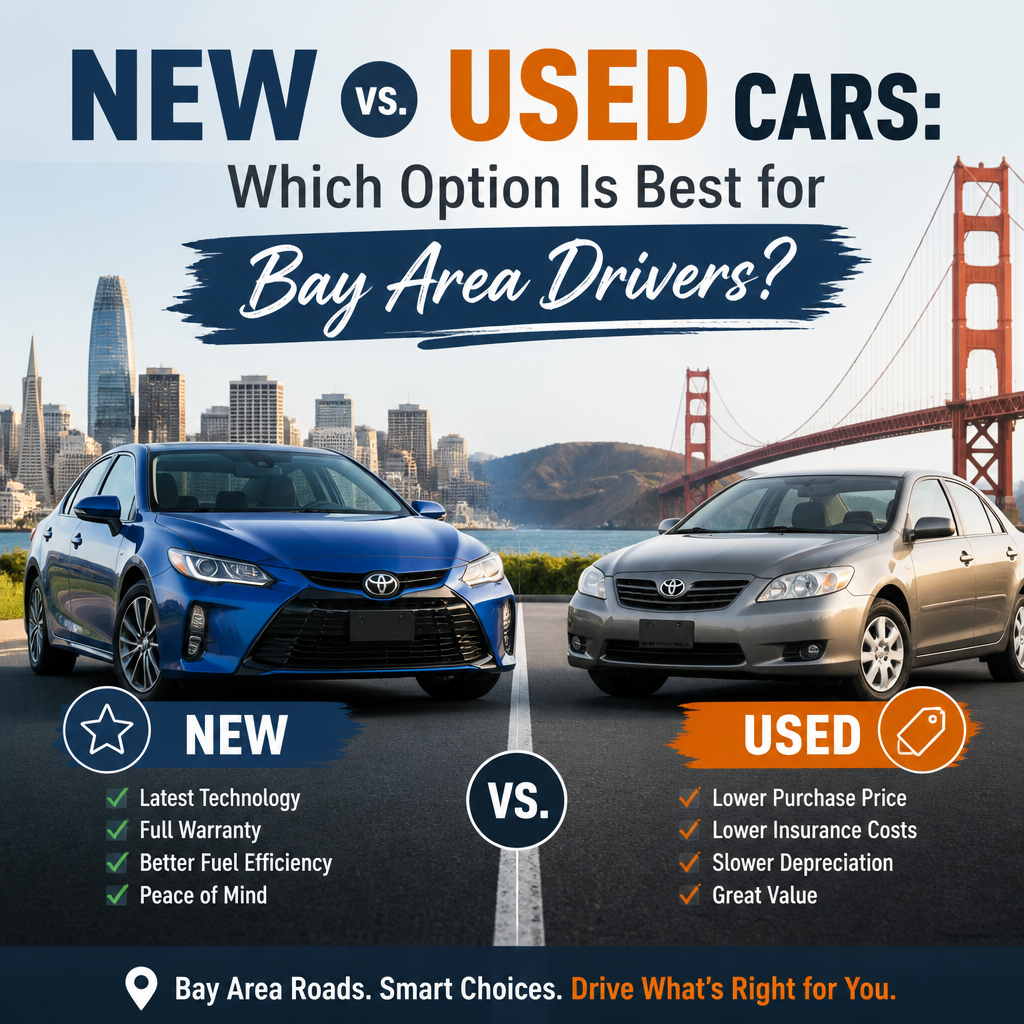
The Advantages of Buying a New Car
A new car offers the latest technology, modern safety features, and the reassurance of a full manufacturer’s warranty. For drivers who plan to keep their vehicle for many years, this added peace of mind can be valuable.
New cars often include:
- Advanced driver-assistance features
- Improved fuel efficiency
- Apple CarPlay and Android Auto
- Updated emissions technology
- Comprehensive warranty coverage
- Access to the latest electric and hybrid models
This is especially important in the Bay Area, where electric vehicles and hybrids are increasingly popular. A new EV may provide better range, faster charging, and more refined software than an older model.
New vehicles also tend to require fewer repairs during the first few years of ownership. Although routine maintenance is still necessary, you are less likely to face immediate expenses related to worn brakes, aging batteries, or previous owner neglect.
The Drawbacks of Buying New
The biggest disadvantage is cost. New vehicles typically have higher purchase prices, insurance premiums, registration fees, and sales taxes. They also depreciate quickly, with much of the value loss occurring during the first several years.
For Bay Area drivers, the higher price may be difficult to justify if the vehicle will spend most of its time in traffic, parked on busy streets, or exposed to minor dents and scratches. Financing a new car can also create a larger monthly payment, particularly when interest rates are high.
Why a Used Car May Be a Better Value
Used cars generally offer lower upfront costs and slower depreciation. A vehicle that is two to five years old may still provide modern safety equipment and dependable performance while costing significantly less than a comparable new model.
Buying used can make sense for drivers who want to:
- Keep monthly payments manageable
- Reduce insurance costs
- Avoid rapid depreciation
- Purchase a higher trim level
- Save money for maintenance or charging equipment
A used car may also be ideal for first-time buyers, college students, or commuters who need reliable transportation without taking on a large loan. Certified pre-owned vehicles offer an appealing middle ground, combining lower prices with inspections, limited warranties, and sometimes roadside assistance.
What to Check Before Buying Used
Condition matters more than age alone. Before purchasing, review the vehicle history report and arrange an independent inspection. Check for signs of accident damage, flood exposure, uneven tire wear, and inconsistent maintenance.
Bay Area-specific concerns include:
- Brake and suspension wear from steep roads
- Battery health in used electric vehicles
- Corrosion or moisture damage near coastal areas
- Excessive mileage from long regional commutes
- Wear from frequent stop-and-go traffic
It is also wise to confirm that recalls have been completed and that replacement parts are readily available.
Consider Your Bay Area Driving Habits
Your daily routine should guide your decision. Someone commuting from Vallejo to San Francisco may prioritize fuel economy, comfort, and advanced safety features. A driver living in the city may care more about compact dimensions, parking sensors, and low repair costs.
Consider these questions:
- How many miles do you drive each year?
- Do you have access to home or workplace charging?
- Will you frequently drive in heavy traffic or on steep hills?
- How long do you plan to keep the vehicle?
- Can your budget handle unexpected repairs?
High-mileage commuters may benefit from a newer hybrid or efficient EV, while occasional drivers may save more by purchasing a well-maintained used vehicle.
New vs. Used: Making the Final Choice
There is no universal answer to the new-versus-used debate. A new vehicle is often the better choice for drivers who value the latest features, maximum warranty protection, and predictable ownership costs. A used car may be preferable for buyers focused on affordability, lower depreciation, and overall value.
Before deciding, compare the total cost of ownership—not just the sticker price. Include financing, insurance, registration, fuel or charging, maintenance, and expected repairs. A slightly more expensive vehicle may save money over time if it delivers better efficiency and reliability.
For Bay Area drivers, the best car is the one that fits both local roads and personal finances. Whether new or used, a careful inspection, realistic budget, and clear understanding of your driving needs can help you make a confident purchase.